
Definitely or Definately?
Which Spelling is Correct?
"Definitely" is one of the most commonly misspelled words in English. Thousands of people write "definately" every day. Learn the correct spelling with a simple mnemonic that makes this tricky word impossible to forget.
Common Misspellings:
The Perfect Mnemonic
This simple phrase tells you exactly what letters are in "definitely" and which one is NOT:
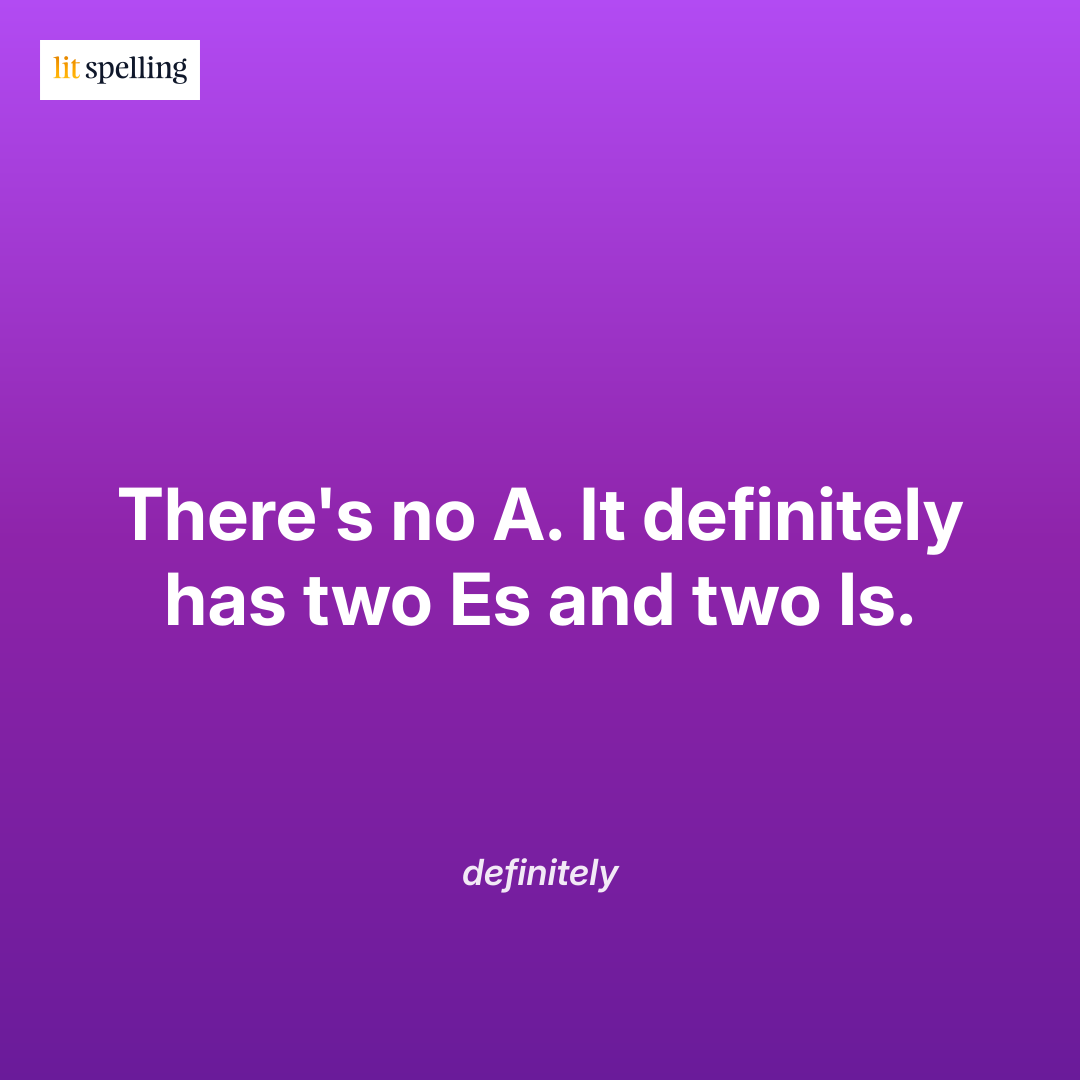
How the Spelling Trick Works
The phrase "There's no A. It definitely has two Es and two Is" is brilliantly designed because:
- It's explicit and direct: "There's no A" tells you exactly what NOT to include
- It counts the correct letters: "two Es and two Is" shows you the actual pattern
- It uses the word itself: "It definitely has" shows you the correct spelling right in the phrase
- It's easy to remember: The simple, declarative statement sticks in your memory
Whenever you're tempted to write "definately," pause and recall this phrase. The reminder that there's "no A" will guide you to spell it correctly with two I's every single time.
Why This Spelling Trick Works So Well
This spelling trick is especially effective because it directly addresses the most common mistake:
Corrects the Error
Most people write "definately" because they hear an "a" sound when pronouncing it. This spelling trick directly counters that mistake by explicitly stating "There's no A."
Shows the Pattern
By counting "two Es and two Is," the spelling trick reveals the actual letter pattern in "definitely." This helps you see the correct spelling structure.
Self-Demonstrating
The phrase uses "definitely" correctly, so every time you recall the spelling trick, you're seeing and reinforcing the right spelling. This creates a positive feedback loop in your memory.
Clear and Memorable
The spelling trick is short, simple, and declarative. There's no complex wordplay or obscure reference to remember. Just a straightforward fact: no A, two Es, two Is.
Practice Makes Perfect
Want to master "definitely" and hundreds of other commonly misspelled words? Try our interactive spelling practice app with adaptive learning and instant feedback.
Word Origin
The word "definitely" comes from "definite" plus the adverb suffix "-ly". "Definite" comes from Latin "definitus" (bounded, limited), which comes from "finis" (end, limit). This is why it contains the word "finite" - both share the same Latin root.
Etymology Path:
Latin definitus → Middle English definit → Modern English definitely
Frequently Asked Questions
Everything you need to know about spelling "definitely" correctly