How to Spell Embarrass
Is it embarass, or embarrass?
Common Misspellings:
📊 Commonly misspelled - both RR and SS required
You're Not Alone
"Embarrass" ranks among the most frequently misspelled words because it has two different sets of double letters (RR and SS) that aren't obvious from pronunciation. Most people drop at least one double, writing "embarass" or "embarras." This emotional mnemonic will help you remember both doubles forever.
Why This Mistake Happens
Pronunciation masks double letters: When you say "em-BEAR-us," you don't hear distinct double R's or double S's. The stress falls on the middle syllable, blurring the consonants together. Your ear can't tell you which letters double.
Rare double-double pattern: English rarely stacks two different double consonant pairs (RR-SS) in one word. Your brain expects single letters because that's the common pattern. Words with multiple doubles (like "embarrass" and "accommodate") feel unnatural.
French spelling imported wholesale: "Embarrass" comes from French "embarrasser," which has RR and SS by French convention. English borrowed the word with its French spelling intact, so the pattern doesn't follow English phonetic logic. Without knowing French, the doubles seem arbitrary.
Word Origin
"Embarrass" comes from French "embarrasser" (to block, obstruct), which derives from Spanish "embarazar" (to impede, hamper). The word entered English around 1660 meaning "to hamper or impede" and gained the psychological sense of "to make self-conscious or uncomfortable" by the 1800s. The double R and double S come from French spelling conventions, not English phonetics.
Etymology Path:
French embarrasser → Early Modern English embarrass → Modern English embarrass
The Spelling Trick
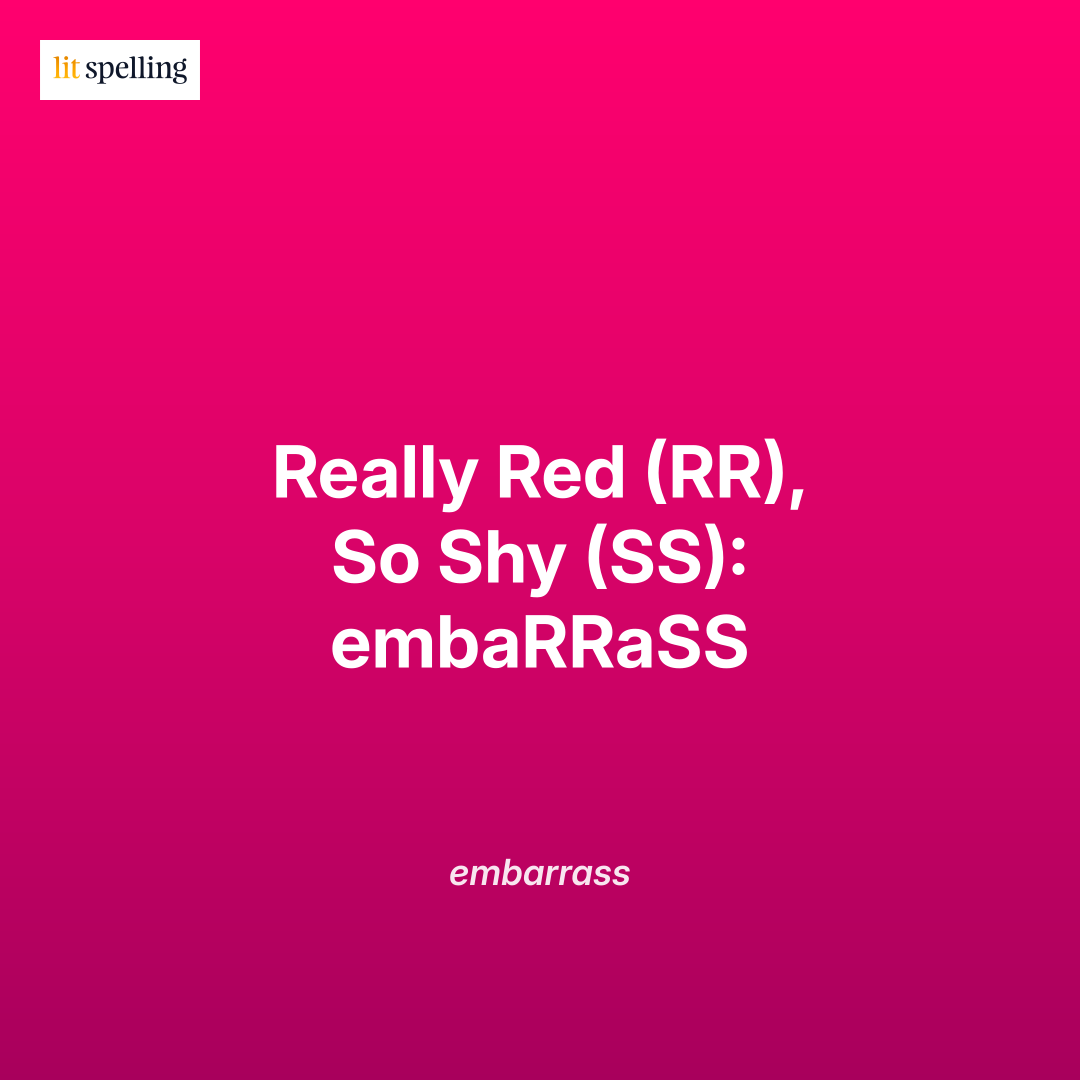
"Really Red (RR), So Shy (SS): embaRRaSS"
Why it works: When you're embarrassed, you turn really red (face flushing) and feel so shy (want to hide). The physical and emotional reactions create a visceral memory - "Really Red" gives you RR, "So Shy" gives you SS. The spelling trick connects the spelling to the exact feeling you're trying to describe.
How to use it: When you're typing "embarrass" and hesitate on the consonants, recall the feeling: "Really Red, So Shy." Picture someone blushing bright red (RR) and shrinking back shyly (SS). The emotional connection locks in embaRRaSS with both doubles exactly where they belong.
Examples in Context
Social: "I was so embarrassed when I tripped in front of everyone."
Professional: "The technical glitch during the presentation didn't embarrass her at all."
Parenting: "Please don't embarrass me at the school event, Dad."
Self-reflection: "Looking back, I shouldn't feel embarrassed about asking for help."
Empathy: "She tried to help without embarrassing him in front of his friends."
Common Mistakes to Avoid
✗ embarass - Missing one R (single R instead of RR)
✗ embarras - Missing one S (single S instead of SS)
✗ embaras - Missing both doubles (single R and single S)
Quick tip: Remember "Really Red (RR), So Shy (SS)" - embarrassment comes with blushing (RR) and shyness (SS). Related words like "embarrassment" and "embarrassing" follow the same pattern, always with both RR and SS.