
Weird or Wierd?
Which Spelling is Correct?
"Weird" is one of the trickiest words in English because it breaks the famous "i before e" rule. Learn the correct spelling with a simple mnemonic that makes this exception impossible to forget.
Common Misspellings:
The Perfect Mnemonic
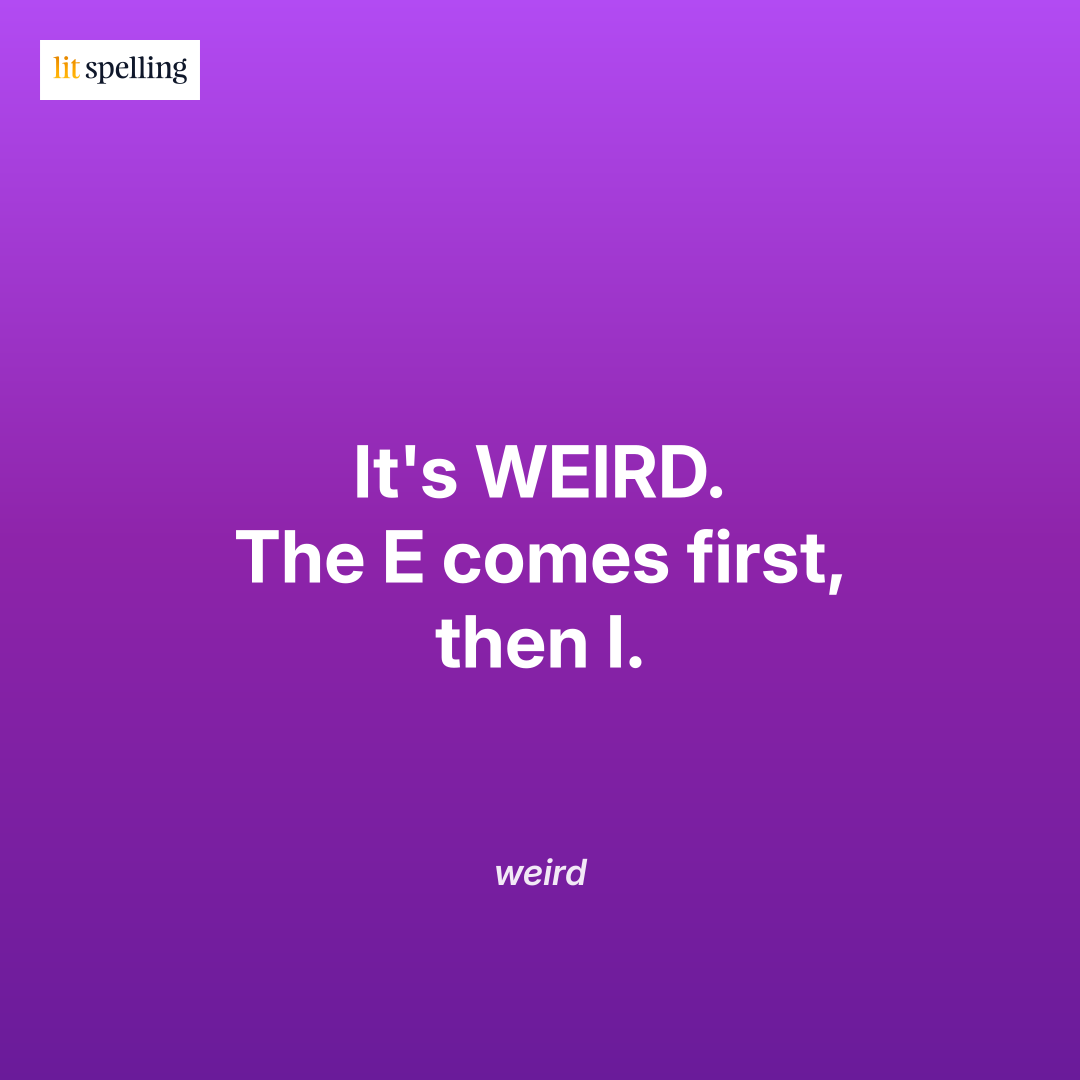
This clever phrase helps you remember that "weird" breaks the rules and tells you exactly how to spell it:
How the Spelling Trick Works
The phrase "It's WEIRD: the E comes first, then I" is perfectly designed because:
- It tells you the word is exceptional by calling it "weird" (unusual, strange)
- It gives you the exact letter order, "E comes first, then I"
- It's self-referential, the word "weird" in the phrase shows you the correct spelling
- It counteracts your instinct to follow the "i before e" rule
Whenever you start to write "wierd," pause and think: "Wait, it's WEIRD, the E comes first!" This simple reminder will override the misleading "i before e" rule and guide you to the correct spelling.
Why This Spelling Trick Works So Well
This spelling trick is especially effective because it helps you overcome a deeply ingrained spelling rule:
Interrupts Automatic Thinking
Most people automatically apply the "i before e" rule without thinking. This spelling trick forces you to pause and consciously remember that "weird" is an exception.
Uses the Word Itself
By including "weird" in the spelling trick phrase, you see the correct spelling every time you recall it. This reinforces the right pattern through repetition.
Memorable and Playful
The phrase is clever and somewhat humorous, calling out that the word's spelling is itself weird. This emotional connection makes it stick in your memory.
Clear Instructions
Unlike vague rules, this spelling trick gives you direct, actionable guidance: "E comes first, then I." There's no ambiguity or room for confusion.
Practice Makes Perfect
Want to master "weird" and hundreds of other commonly misspelled words? Try our interactive spelling practice app with adaptive learning and instant feedback.
Word Origin
The unusual spelling of 'weird' reflects its Old English origins. The 'ei' pattern comes from the original 'wyrd,' which evolved through Middle English spelling variations. When Shakespeare used 'Weird Sisters' in Macbeth (meaning 'fate-controlling sisters'), he helped popularize both the word and its unconventional spelling.
Etymology Path:
Old English wyrd → Middle English werd, weerd → Modern English weird
Frequently Asked Questions
Everything you need to know about spelling "weird" correctly